|
Services include training,
custom furniture, and consulting with designers for ideas and approaches
for use of American Period Furniture.
Training
Classes are limited to 2 or
3, with most offerings being one on one.
All classes focus on learning and accomplishing a project or
improving a skill.
Classes are customized to
individuals and their specific needs.
Areas of emphasis include, but are not limited to:
- Veneering and use of
veneer
- Decorative inlay, matching,
marquetry
- Making and using
custom tools to meet your needs
- Finishing
- Design
Veneering
Veneers provide a method to use difficult wood, wood that is
expensive, or the creation of patterns or matching that is not practical in
solid material.
Veneering classes will focus on understanding the material, the
methods of bonding, alternate methods for pressing, ways
of jointing, decorative uses.
Marquetry is closely related to
veneering. It uses the same
material, and bonding is similar, but marquetry
is like painting with wood. The various
methods and approaches are reviewed, demonstrated, practices.
Custom Tools
I make tools to meet the
needs of my projects. I do mostly “one
of”, a single copy if you will for most of my projects. Often I need to perform some effort that
is not possible with a mechanized tool or if so, is too troublesome to set
up or execute. Too often modern
woodworkers only think in terms of a power tool. Sometimes the old ways are the best.
The other aspect of my effort
is practicality. If I am making a
tool that will only be used for a single project, I try to make it work,
and not make it perfect. More time
spent making furniture is more fun than making custom tools.
Finishing
WARNING: Many of these finishes have some sort of solvent
present that is given off as it dries. Those solvents are potentially
harmful if breathed and/or flammable if exposed to flames. It is
important to only work in well ventilated areas, using proper breathing and
eye protection devices, and following manufactures suggested
procedures. Always review prior to use the medical procedures in the
event of an accident or improper use.
For the type furniture I make, the primary finishes I use are shellac,
oils (tung) and wax.
Methods of application. I have applied shellac with all current
forms of application. I have recently discovered that when brushing
if a sable hair brush is used, there are no visible brush marks. This
is a real joy to use and the results are exceptional.
I suggest if you are interested in these techniques you try them and
observe your outcome. You will never learn from just reading.
Live the experience.
- Rubbing - the first
coats of rubbing a finish are the easiest to apply and require the
least skill. With shellac, as more coats are applied it requires
more attention to avoid "burning" or build up of
finish. Getting the "feel" of the process is something
that is learned by trying and observing the results.
- Brushing - this
requires attention to avoid excessive brush marks. Too much
brushing is often a problem. Shellac dries quickly and if you
attempt to continue to brush it out, it will grab and create brush
marks. Just move on to other areas. In worst cast, go back
and sand it flat and continue.
- Spraying - this requires
special equipment and should be done in an open area.
- Rub out - this is a
method to finish the finish. All finishes after properly applied
still have minor imperfections that effect their appearance and
tactile properties of the wood. In the 17th and 18th centuries,
the finisher would have used rotten stone and pumice and bees wax for
the final finishing. These fine powders provide for an ever
finer polishing of the surface that ultimately improve
the light reflective and tactile quality. The final application
of bees wax gives the warm feel and enhances the quality of the
surface reflection.
My finish of choice is shellac. While his finish has gotten some
bad press in the past about its inability to handle alcohol and water,
those claims are not completely accurate. Additionally, the type
furniture I make is not what the owners would allow alcohol or water to
stand for extended periods of time. Shellac produces a more natural
and "warm" finish. It can be finished to a high luster or a
matte surface. The finish may be applied with a rag, brush or spray
equipment. It is very forgiving and can be repaired at nearly any
phase of the process.
Custom Furniture
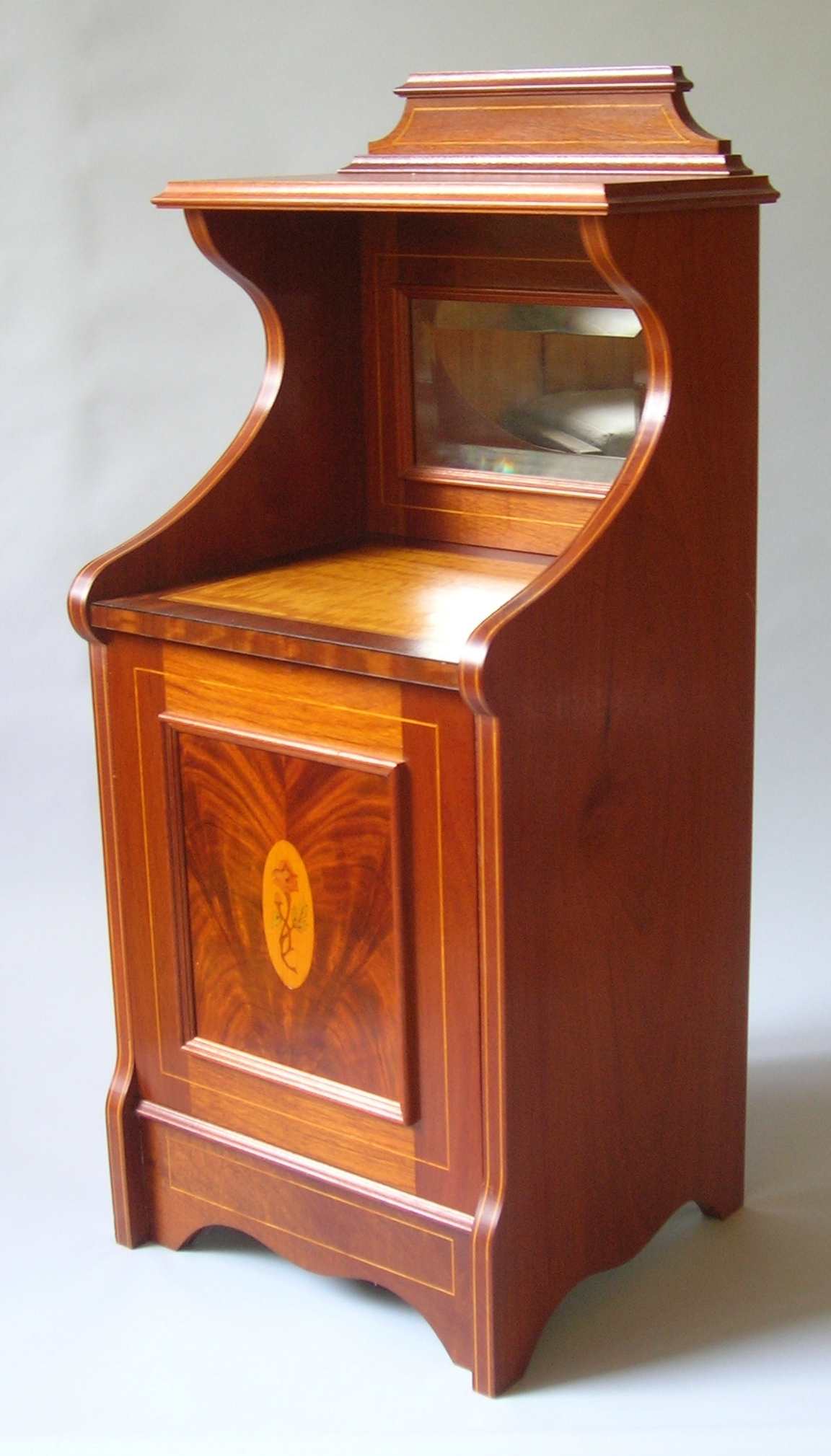
My practice is to make custom, high end, period furniture. I do not stock inventory, and usually
only make a single copy of the piece.
Most of my experience is in the Federal style, but I have made
Chippendale style furniture. If you
have a special piece or would like a copy of some of the items in my
gallery.
Consulting/Collaboration
I spent 30 years in the electric power industry providing consulting
services. My approach was to combine
my knowledge, experience, and commitment to deliver results. My approach is the same here. Talk is cheap unless it can produce
reliable results. I offer services
to those looking to explore ideas and approaches to meet a special
customers needs.
c/o Ken Johnson
Marietta, Georgia
|